Understanding the German Shorthaired Pointer Coat
German Shorthaired Pointers have a short, close-fitting coat that complements their athletic build and active sporting lifestyle. The coat is generally firm to the touch, with finer hair around the head and ears.
Their distinctive appearance includes solid liver, liver and white, roan, patched and ticked coat patterns, among other variations. Coat colour does not generally change the fundamental grooming requirements.
Key Coat Characteristics
- Short, dense and close-fitting hair.
- Relatively simple brushing requirements.
- Regular shedding despite the short coat.
- Potential increases in seasonal shedding.
- No routine requirement for haircuts.
- Natural protection that should be preserved.
A short-haired dog is not necessarily a low-shedding dog. German Shorthaired Pointer hairs can become embedded in clothing, carpets and upholstery. Consistent brushing helps manage loose hair.
Recommended GSP Grooming Schedule
Establishing a predictable grooming routine helps maintain your dog's comfort and makes individual grooming tasks easier. Adjust the following schedule according to your dog's age, activity level, health and lifestyle.
| Grooming Activity | Frequency | Purpose |
|---|---|---|
| Coat Brushing | Every 2–3 days | Remove loose hair and surface dirt. |
| Bathing | Every 2–3 months or as needed | Maintain cleanliness without unnecessary washing. |
| Ear Inspection | Weekly and after swimming | Identify irritation, moisture or debris. |
| Ear Cleaning | As needed or veterinarian-directed | Support healthy ear hygiene. |
| Nail Trimming | Approximately every 2–4 weeks | Maintain comfortable movement. |
| Teeth Brushing | Daily, ideally | Reduce plaque accumulation. |
| Paw Inspection | After outdoor activities | Identify injuries and trapped debris. |
| Skin Inspection | During every grooming session | Identify irritation, parasites or unusual changes. |
| Eye Inspection | Daily | Monitor discharge, redness and irritation. |
Essential Grooming Tools
German Shorthaired Pointers do not require complicated grooming equipment. A carefully selected collection of basic tools is sufficient for most routine home grooming sessions.
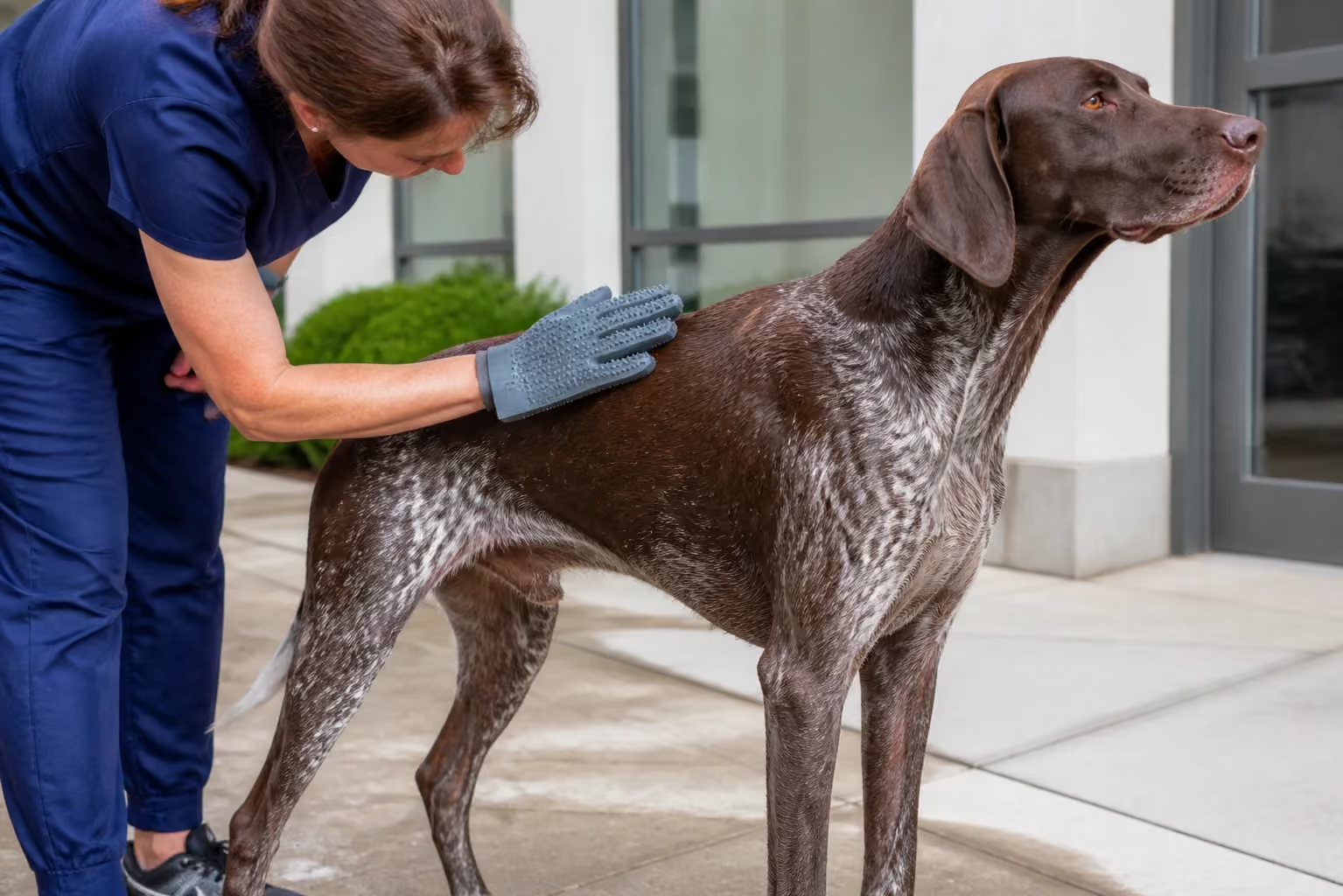
Rubber Grooming Mitt
Gently removes loose hair while providing a comfortable massaging action.
Soft Bristle Brush
Removes surface dirt and helps distribute natural oils across the coat.
Dog-Specific Shampoo
A gentle canine shampoo suitable for your dog's skin condition and coat.
Nail Clippers or Grinder
Properly sized equipment for maintaining comfortable and manageable nail lengths.
Canine Ear Cleanser
A veterinarian-recommended product for safe, appropriate ear cleaning.
Dog Toothbrush & Toothpaste
Canine dental products designed for regular oral hygiene maintenance.
Absorbent Towels
Useful for drying the coat, paws and outer ears following baths or swimming.
Treats & Rewards
Encourage calm cooperation and positive associations with grooming routines.
Brushing & Managing Shedding
Regular brushing is one of the simplest and most effective ways to maintain your German Shorthaired Pointer's coat. It removes loose hairs, clears surface debris and provides an opportunity to examine the skin.
How to Brush Your German Shorthaired Pointer
- Choose a Comfortable Location Select a quiet area where your dog feels relaxed and secure.
- Begin at the Shoulders Use a rubber grooming mitt or soft brush and work gently in the direction of hair growth.
- Work Across the Body Gradually brush the back, sides, chest, legs and other areas your dog comfortably allows.
- Inspect the Skin Look for redness, unusual bumps, parasites, wounds or excessive flaking.
- Reward Calm Behaviour Finish with praise or a small reward to reinforce a positive grooming experience.
During periods of increased shedding, gentle daily brushing may help reduce the amount of loose hair around your home. Avoid aggressive brushing that irritates or scratches the skin.
Bathing Your German Shorthaired Pointer
Most healthy German Shorthaired Pointers require occasional rather than frequent bathing. Dogs that regularly swim, explore muddy terrain or participate in field activities may require more frequent cleaning.
A bath every two to three months is a reasonable starting point for many healthy GSPs, with additional baths when necessary. Dogs with skin conditions may require a different veterinarian-directed schedule.
Step-by-Step Bathing Routine
- Brush Before Bathing Remove loose hair, surface dirt and accessible debris from the coat.
- Prepare Lukewarm Water Use a secure bathing area with a non-slip surface.
- Wet the Coat Thoroughly Gently wet the body while avoiding direct water flow into the ears, eyes and nose.
- Apply Dog-Specific Shampoo Massage the shampoo gently through the coat according to the product instructions.
- Rinse Completely Remove all shampoo residue to reduce the likelihood of skin irritation.
- Dry Your Dog Use an absorbent towel and ensure the dog remains warm until sufficiently dry. Dry the outer ears gently.
Bathing Precautions
Avoid human shampoo, harsh detergents, excessively hot water and strongly fragranced products. Never use a medicated shampoo without appropriate veterinary advice.
Ear Cleaning & Ear Health
The characteristic floppy ears of German Shorthaired Pointers can limit airflow around the ear canal. Moisture, debris and underlying skin conditions can contribute to ear problems, particularly in dogs that swim frequently.
Routine Ear Care
- Inspect both ears at least once a week.
- Check the ears after swimming and bathing.
- Gently dry the outer ear with a clean towel.
- Use a veterinarian-approved ear cleanser when needed.
- Follow your veterinarian's demonstrated cleaning technique.
- Avoid inserting cotton swabs into the ear canal.
Recognizing Ear Problems
Persistent head shaking, excessive scratching, redness, unusual discharge, unpleasant odour or pain may indicate an ear infection or another condition. Seek veterinary advice rather than attempting repeated home cleaning.
Nail Trimming & Foot Comfort
German Shorthaired Pointers are naturally active dogs. Maintaining an appropriate nail length supports comfortable movement and helps reduce the risk of nails catching on uneven surfaces during outdoor activities.
Nail growth varies between individual dogs. Some naturally wear their nails through activity, while others require regular trimming approximately every two to four weeks.
Safe Nail Maintenance
- Use appropriately sized canine nail clippers or a grinder.
- Handle each paw gently and avoid forcing cooperation.
- Remove small amounts of nail at a time.
- Avoid the sensitive blood supply inside the nail.
- Remember to inspect dewclaws where present.
- Keep canine styptic powder available for minor bleeding.
Dark nails can make the sensitive quick difficult to identify. If you are uncertain about safe trimming, ask a veterinarian or experienced professional groomer to demonstrate the correct technique.
Dental Care & Oral Hygiene
Dental hygiene is an important part of German Shorthaired Pointer grooming. Plaque accumulation can contribute to gum inflammation, unpleasant breath and periodontal disease.
Daily brushing with a dog-specific toothbrush and toothpaste is an effective foundation for maintaining oral health between veterinary dental examinations.
Building a Healthy Dental Routine
- Introduce gentle mouth handling gradually.
- Choose toothpaste specifically formulated for dogs.
- Brush the accessible outer surfaces of the teeth gently.
- Use appropriate veterinary-recommended dental chews if suitable.
- Arrange routine veterinary dental examinations.
Never Use Human Toothpaste
Human toothpaste is not formulated for dogs to swallow. Some products contain xylitol, which is highly toxic to dogs. Always select canine-specific dental products.
Paw, Eye & Facial Care
Active sporting dogs frequently encounter rough ground, vegetation, mud and changing weather conditions. Regular inspection of the paws and face helps identify potential problems following outdoor activities.
Paw Care
- Inspect paw pads after long walks and outdoor adventures.
- Look between the toes for grass seeds and debris.
- Remove loose surface dirt using clean water.
- Dry paws thoroughly after cleaning.
- Monitor for cracking, swelling, cuts or persistent licking.
- Avoid excessively hot pavement and hazardous surfaces.
Eye & Facial Care
Examine your dog's eyes regularly for redness, cloudiness, discomfort or unusual discharge. Small amounts of ordinary debris around the eyes can be gently wiped away using a clean, soft, damp cloth.
Avoid applying cosmetic products or non-prescribed eye medications. Persistent squinting, eye injury, sudden cloudiness or significant redness requires prompt veterinary attention.
Grooming German Shorthaired Pointer Puppies
Introducing grooming during puppyhood helps establish positive associations with brushing, bathing, paw handling and routine physical examinations.
The objective is not to complete every grooming task immediately. Instead, gradually help your puppy become comfortable with gentle handling and unfamiliar equipment.
- Start With Gentle Handling Briefly touch your puppy's paws, ears and body during relaxed moments.
- Introduce Grooming Equipment Allow the puppy to investigate a soft brush or grooming mitt without pressure.
- Keep Sessions Short Begin with a minute or two and gradually increase the duration as confidence develops.
- Use Positive Reinforcement Reward calm behaviour with suitable treats, praise and gentle encouragement.
- Build a Consistent Routine Repeat positive experiences regularly without overwhelming your puppy.
Never punish a puppy for being afraid of grooming. Pause when signs of stress appear and resume gradually when your puppy is relaxed.
Seasonal Grooming Requirements
Your German Shorthaired Pointer's grooming needs may change throughout the year. Adjust your routine to suit the local climate, outdoor activities and individual coat condition.
Spring
Increase brushing if shedding becomes more noticeable. Check the coat and paws for ticks, grass seeds and debris after outdoor activities.
Summer
Inspect and dry the outer ears after swimming. Protect paws from hot surfaces and rinse away salt, chlorine or dirt when necessary.
Autumn
Maintain consistent brushing and inspect your dog's skin and paws for vegetation, burrs and seasonal outdoor debris.
Winter
Check paws for ice, salt and irritation. Dry the coat following wet outdoor activities and monitor for dry skin or discomfort.
Common Grooming Mistakes to Avoid
A simple, consistent grooming routine is generally more beneficial than unnecessary treatments or excessive maintenance.
| Common Mistake | Better Approach |
|---|---|
| Bathing excessively | Bathe according to actual cleanliness and individual skin requirements. |
| Using human shampoo | Choose a suitable dog-specific shampoo. |
| Neglecting ear inspections | Check ears regularly, especially following water activities. |
| Allowing nails to overgrow | Inspect nail length regularly and trim when appropriate. |
| Ignoring dental hygiene | Introduce regular toothbrushing and veterinary dental examinations. |
| Shaving the coat unnecessarily | Preserve the natural coat unless veterinary treatment requires clipping. |
| Using excessive brushing pressure | Brush gently using equipment suitable for short-haired breeds. |
| Forcing a frightened dog | Use gradual introductions, patience and positive reinforcement. |
When Grooming Reveals a Health Concern
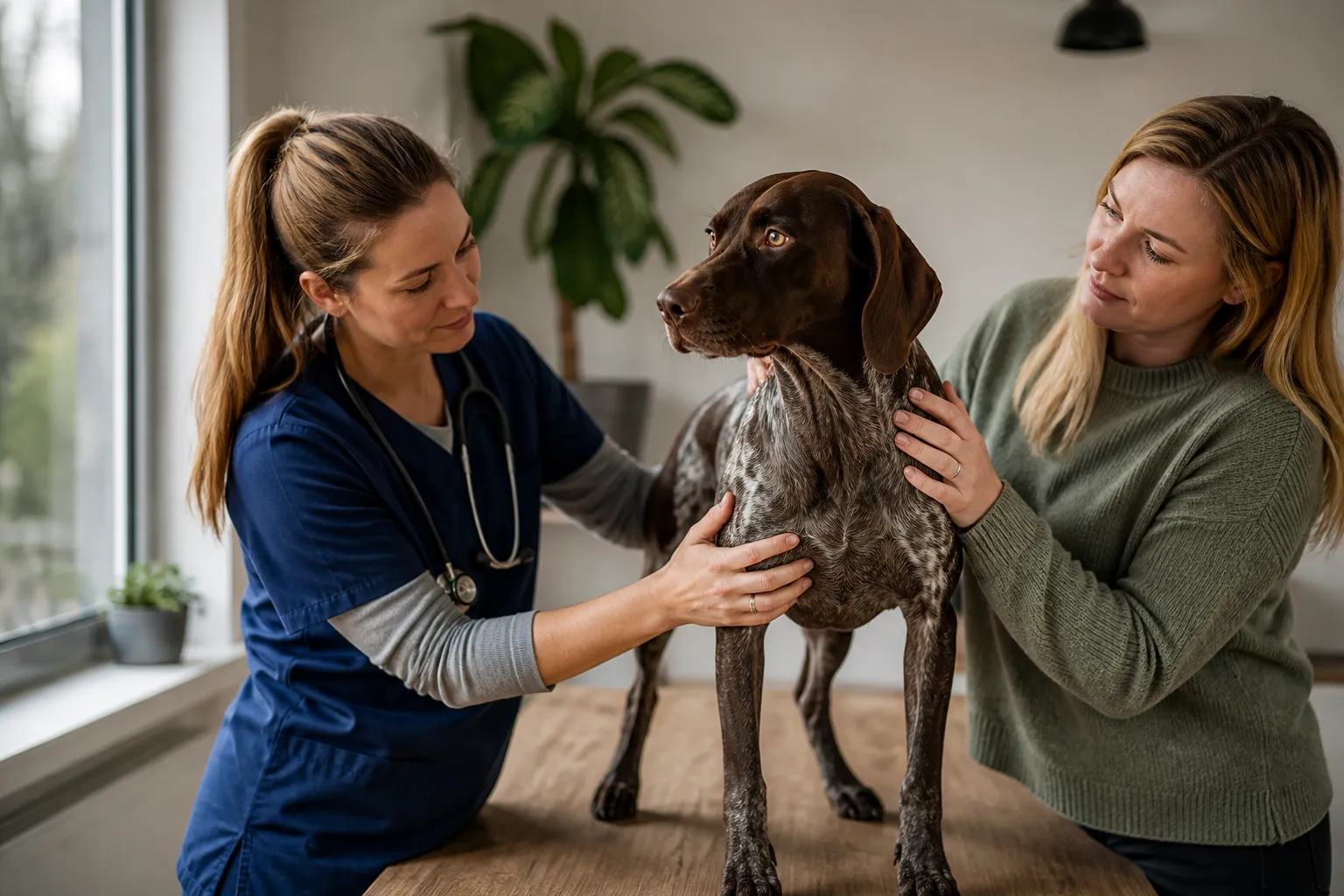
Routine grooming allows owners to become familiar with their dog's normal skin, coat, ears, paws and physical condition. Unusual changes should not be dismissed as ordinary grooming issues.
Signs That Require Veterinary Attention
- Persistent or excessive scratching.
- Unexplained hair loss or bald patches.
- Red, inflamed or painful skin.
- Unusual lumps or rapidly changing growths.
- Persistent ear odour or discharge.
- Bleeding gums, loose teeth or difficulty eating.
- Swollen paws, limping or infected wounds.
- Persistent eye discharge or squinting.
- Sudden changes in coat condition.
Consult a qualified veterinarian for diagnosis and appropriate treatment. Seek urgent care for significant injuries, severe pain, sudden eye changes or bleeding that does not stop.
Grooming supports preventive care but does not replace veterinary examinations, professional diagnosis or medical treatment.
Your Interactive Grooming Checklist
Use this practical checklist to work through your German Shorthaired Pointer's grooming routine. Complete each activity when due according to your dog's individual schedule.
Frequently Asked Grooming Questions
Are German Shorthaired Pointers easy to groom?
Yes. Their short coat requires relatively little maintenance compared with many long-haired breeds. Regular brushing, ear checks, nail maintenance and dental care are still essential.
Do German Shorthaired Pointers shed a lot?
German Shorthaired Pointers shed regularly, with some experiencing increased shedding during seasonal changes. Gentle, consistent brushing helps manage loose hair.
How often should I brush my GSP?
Brushing every two or three days is suitable for many German Shorthaired Pointers. Gentle daily brushing may be helpful during heavier shedding.
How often should a German Shorthaired Pointer be bathed?
Many healthy GSPs require a bath approximately every two to three months, or whenever they become particularly dirty. Individual skin conditions and activity levels may change this schedule.
Do German Shorthaired Pointers need haircuts?
No routine haircut is necessary. Their naturally short coat can generally be maintained through brushing and occasional bathing.
Can I shave my German Shorthaired Pointer in summer?
Routine shaving is unnecessary. Provide adequate shade, fresh water and appropriately timed outdoor exercise instead. Clipping may be required for particular veterinary procedures.
What is the best brush for a German Shorthaired Pointer?
A rubber grooming mitt or soft bristle brush is generally suitable. These tools help remove loose hair without unnecessary irritation.
Are German Shorthaired Pointers hypoallergenic?
No. German Shorthaired Pointers produce dander and other allergens and are not considered hypoallergenic. Their short coat does not eliminate the possibility of allergic reactions.
Why does my GSP have an unpleasant smell?
Odour may result from outdoor dirt, moisture, dental disease, ear problems or skin conditions. Persistent or unusual odour should be investigated by a veterinarian.
How often should I trim my GSP's nails?
Many dogs benefit from nail trimming every two to four weeks. The actual frequency depends on nail growth, activity and natural wear.
Can I groom my German Shorthaired Pointer at home?
Yes. Most routine grooming tasks can be performed at home using suitable equipment. Seek professional assistance when you are uncertain about safe nail trimming, ear care or handling.
When should I start grooming my GSP puppy?
Begin introducing gentle handling and age-appropriate grooming during puppyhood. Keep early sessions brief, comfortable and positively reinforced.
Does grooming improve my dog's health?
Regular grooming supports hygiene, comfort and preventive care. It also creates opportunities to recognize physical changes that may require veterinary attention.
Can nutrition affect my GSP's coat?
Yes. Appropriate nutrition supports normal skin function and coat condition. Persistent coat problems may also have medical causes and should be assessed by a veterinarian.
Should I clean my GSP's ears after swimming?
Inspect the ears and gently dry the outer ear after swimming. Use ear cleansing products when appropriate and according to veterinary guidance, rather than automatically after every swim.
Further Reading & Trusted Resources
American Kennel Club — German Shorthaired Pointer
German Shorthaired Pointer Club of America
ASPCA — Dog Grooming Recommendations
This guide is provided for general educational purposes and does not replace individualized advice from a qualified veterinarian.